The right nurse injector course in Ontario is one that gives you theory, supervised practice on live models and an honest evaluation, in a class small enough that a trainer sees every injection you make. Everything else on a school's website is decoration.
The trouble is that most course pages look alike. They all promise hands-on training, expert faculty and a certificate. So instead of comparing promises, ask every school the same 8 questions before you pay. The answers tell you whether you'll leave able to work, or only holding a certificate.
1. Will I inject live models?
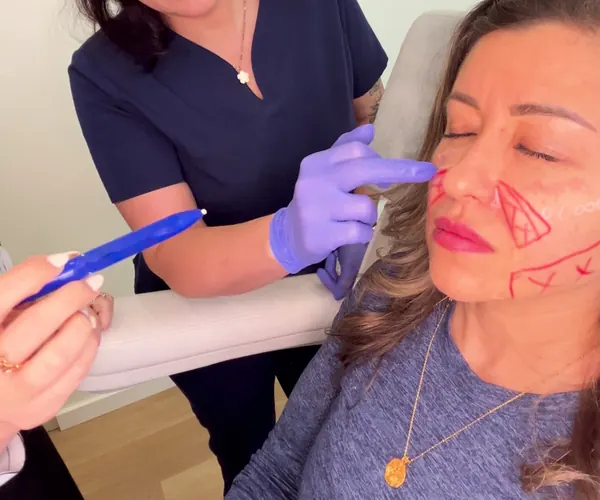
This is the first question because it decides the rest. Practice pads and mannequins teach hand position. They don't teach you how a real face moves, how a real client reacts, or what it feels like to be responsible for the result.
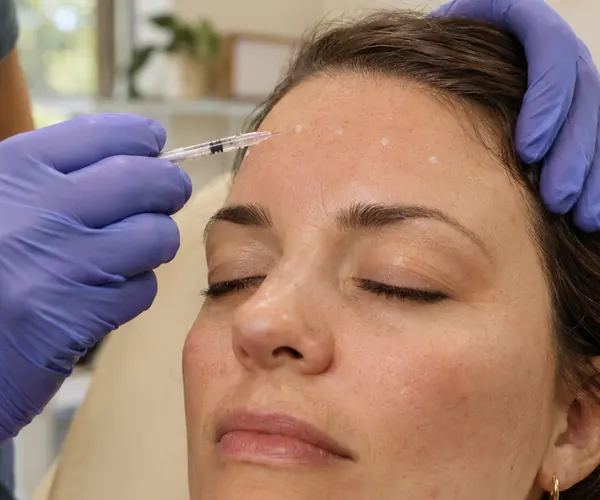
CNO's Aesthetic Services practice guideline describes good training as theory, supervised practice and evaluation. Supervised practice means real clients. Ask how many models you will treat, and whether each one is assessed by an NP or physician and treated on an order for that one client. That's how you'll work after 1 March 2027, so it's how you should train.
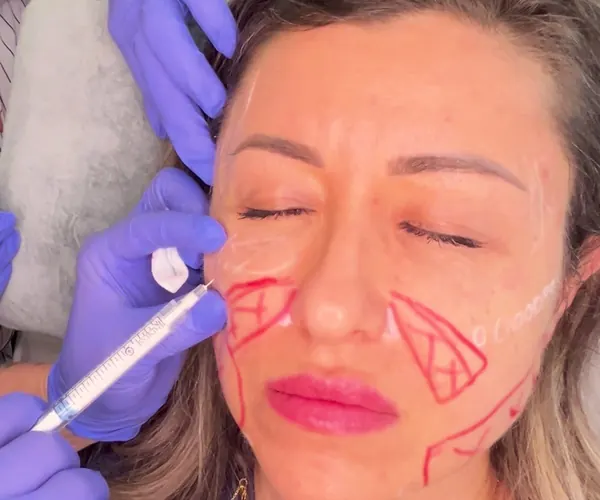
Our answer: yes. Our injecting courses are taught on live models, each one assessed by an NP or physician first.
2. How many students are in the class?
A trainer can only watch one needle at a time. In a big class, most of your injections happen while the trainer is looking at someone else.
Ask for the maximum, not the average. Ask how many trainers are in the room. And ask how many models each student treats, because a small class with one model shared between five people isn't small.
Our answer: 3 students per class at most.
3. How is supervised practice run, and how am I evaluated?
Supervision is more than someone in the room. Ask what the trainer does before you inject: do they check your plan, your landmarks, your product choice? Ask who signs off on your work, and what they look for.
Evaluation is the part most courses skip. A certificate that only says you attended tells an employer very little.
Our answer: you mark the landmarks and the vessels in white pencil, and your trainer checks your map before anything else happens. Then you treat under supervision and chart against the order.
4. Are complications taught?
Every injector will face a complication at some point. The question is whether you'll recognize it early and know what to do in the first minutes.
Ask whether the course covers vascular compromise, the emergency kit and what to do first, and whether that is taught as practice or only mentioned on a slide. CNO's guideline lists adverse reactions and managing outcomes in the theory a nurse should have.
Our answer: complications are taught inside every course, and they have a day of their own for injectors who want to practise the first minutes again.
5. What support is there after the course?
The hardest weeks are the first ones on your own: your first client without a trainer at your shoulder, your first unusual result, your first question at 9 at night. Ask what happens after the course ends. Can you ask questions? For how long? Can you come back?
Our answer: 12 months of support after the course.
6. Is the school independent from any product maker?
Some courses are run by, or closely tied to, the companies that sell injectable products. CNO's Aesthetic Services guideline says training should be independent, evidence-informed and not tied to specific product manufacturers. Training tied to one product can lean toward that product.
Ask who owns the school, who pays the trainers, and whether you'll be taught the principles that apply to any product or the steps for one brand. Ask us too: use this as your checklist for any course, ours included.
7. Does the course cover the March 2027 order model?
On 14 October 2026, CNO announced that from 1 March 2027 nurses providing aesthetic treatments involving prescription drugs or controlled acts must work on client-specific orders, not medical directives. The NP or physician assesses each client, in person or virtually, and sets a plan of care before issuing the order.
A course that still teaches a directive workflow is training you for a system that ends in a few months. Ask how the course handles orders for its own models, and whether charting against the order is taught.
Our answer: every model on our table goes through assess, order, map, treat and chart, so you learn the 2027 workflow before you need it. The full change is in 1 March 2027: what changes for Ontario nurse injectors.
8. What is the full price, including HST?
Ask for the price in writing, with HST, and ask what's included: products, models, materials, the certificate, any follow-up. Ask about the refund and transfer terms before you pay, not after.
Our answer: Foundational Botox is 2 days, $2,999 + HST. Foundational Botox & Dermal Filler is 4 days over two weekends, $4,999 + HST. Admissions explains the refund and transfer terms before you pay, and gives the price for every other course on the course map.
How to compare the answers
Put the 8 questions down the side of a page and one column for each school you're looking at. Fill it in from what each school tells you, not from what its website says. Ask by phone or email and keep the replies.
A few patterns show up quickly:
- The vague answers cluster. A school that can't give a class size usually can't say how you're evaluated either.
- Price alone misleads. A cheaper course with ten students and no live models costs you more in the end, because you'll pay to train again.
- Follow-up support shows confidence. A school that expects to hear from you for a year has thought about what happens after the course.
When you've narrowed it to one or two, ask to talk to admissions. Tell them your licence and what you inject now, if anything. A good school will tell you honestly where to start, even when the answer is the cheaper course.
Red flags
Walk away, or at least ask harder, if a school:
- calls its course "CNO approved". CNO doesn't approve or endorse training programs;
- says its certificate lets you inject. Authority comes from your licence and, for RNs and RPNs, an order;
- can't tell you how many students are in the class;
- won't say whether you'll inject live models;
- won't give you a price with HST before you book.
Where to start
If you're new to injecting, start with the foundations. Foundational Botox & Dermal Filler gives you the whole face once, across two weekends. If you'd rather begin with the upper face, Foundational Botox is two days. The next dates for both are on the dates page.
Not sure which fits your licence? Tell us, and we'll tell you where to start and the next date for it.
Questions nurses ask
What is the best nurse injector course in Ontario?
The one that gives you theory, supervised practice on live models and evaluation, in a class small enough for a trainer to watch every injection, with complications taught and a clear price. Ask any school the 8 questions in this post.
How much does a nurse injector course cost in Ontario?
Prices vary by school and course. Ours: Foundational Botox is $2,999 + HST, Foundational Botox & Dermal Filler is $4,999 + HST, and Advanced Botox & Filler is $1,999 + HST. Admissions gives the price for the other courses.
Should I start with Botox or with filler?
If you're new to injecting, start with the foundations: either Foundational Botox (2 days, the upper face) or Foundational Botox & Dermal Filler (4 days, the whole face). Admissions can tell you which fits your licence.
Is any nurse injector course approved by CNO?
No. CNO doesn't approve or endorse training programs. It describes good training as theory, supervised practice and evaluation.
Sources
- College of Nurses of Ontario, Aesthetic Services practice guideline: https://cno.org/Assets/CNO/Documents/Standard-and-Learning/Practice-Standards/practice-guideline-aesthetic-services-en.pdf
- College of Nurses of Ontario, New guideline for nurses supports safe aesthetic services for Ontarians (3 July 2026): https://www.cno.org/news/new-guideline-for-nurses-supports-safe-aesthetic-services-for-ontarians
- College of Nurses of Ontario, CNO strengthens client safety with new requirements for nurses providing aesthetic services (14 October 2026), via Newswire: https://www.newswire.ca/news-releases/cno-strengthens-client-safety-with-new-requirements-for-nurses-providing-aesthetic-services-893472595.html