
Advanced dermal filler course for nurses in Ontario
An advanced dermal filler course for Ontario nurses, NPs and physicians who already treat the cheeks, chin and lips. Cannula technique and the structure of the lower face, in very small groups on live models at our teaching clinic near Bradford, Ontario.
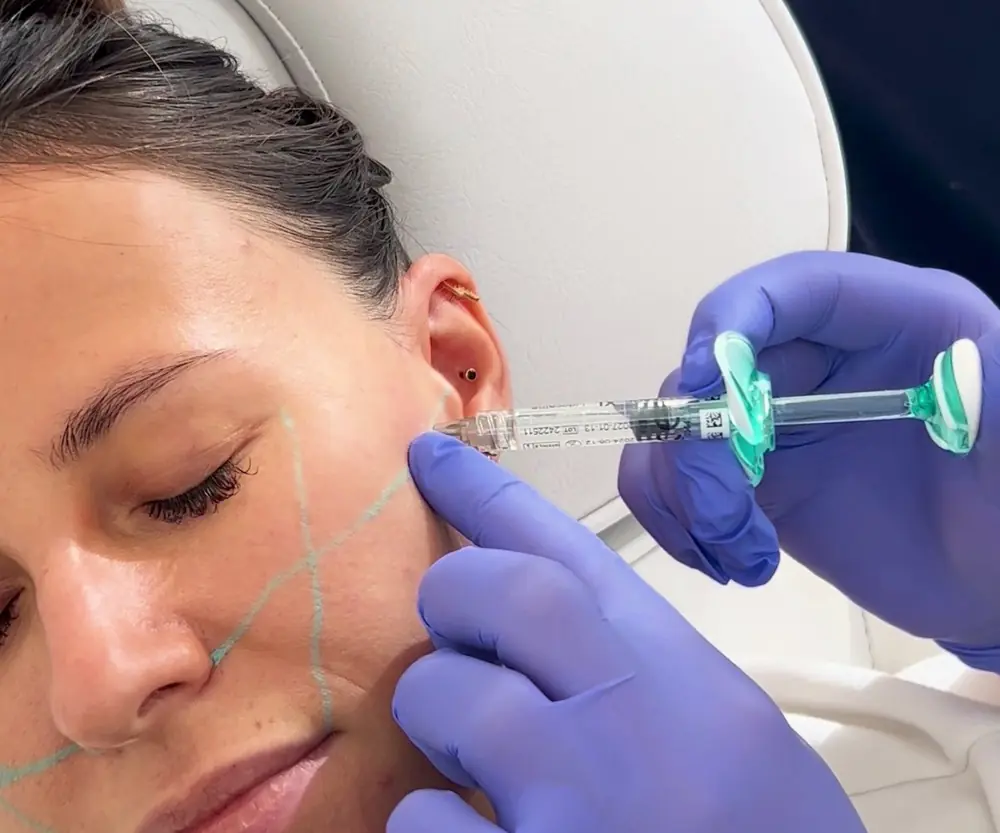 2, 5Midface + Jaw & chin
- In clinicTheory, then supervised hands-on
- 3 students maxVery small groups
- Live modelsEach assessed by an NP or physician
- DatesAsk admissions. All dates
- PriceAdmissions gives the price
Two marks, deeper. Five modules.
Advanced filler is about structure and technique: where the face needs support, and how to place it with fewer entry points. Each module is learned in class first, mapped on a live model in clinic, then treated under supervision.
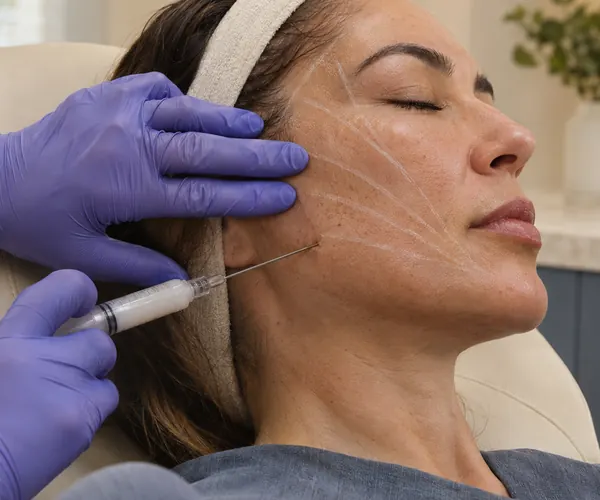
- 2Midface Cannula technique Choosing the entry point, moving through the right layer, and when a cannula fits better than a needle. Practised on the cheek first. Respect: A cannula is blunt, and it still carries risk. You draw every vessel near its path.
- 2Midface Cheeks, for structure Support for the midface over the bone, planned with the client and the NP or physician's plan of care. Respect: The facial artery climbs beside the fold and becomes the angular artery near the nose. You draw it before you treat near it.
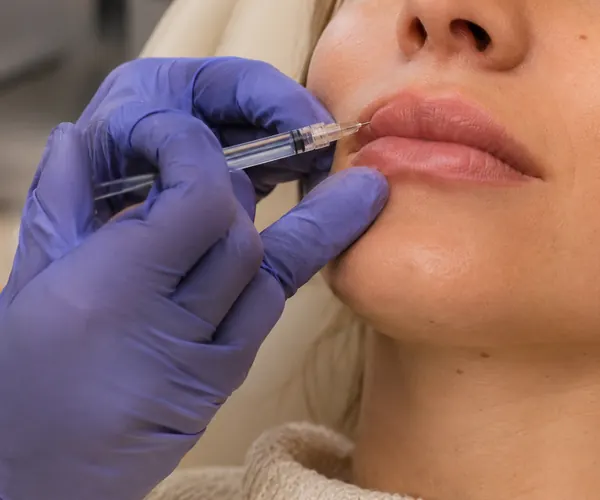
- 5Jaw & chin Chin, further Projection and length for the chin, read from the side as well as the front. Respect: A nerve leaves the bone below the lower teeth. You find its exit before you mark the chin.
- 5Jaw & chin Jawline, and under the chin Definition along the jaw, and the line under the chin. Respect: A small nerve along the jaw moves the lower lip. The facial artery crosses the jaw in front of the jaw muscle. You draw both before you mark the jaw.
- !Red lines The red lines Recognizing a vascular problem in the first minutes, dissolving hyaluronic acid filler, the emergency kit in the room, and what you do, in order. Practised before your first model, not after. The full day is Complications. Why it's a module: More product and deeper planes mean the red lines matter more, not less.
Your clinic days
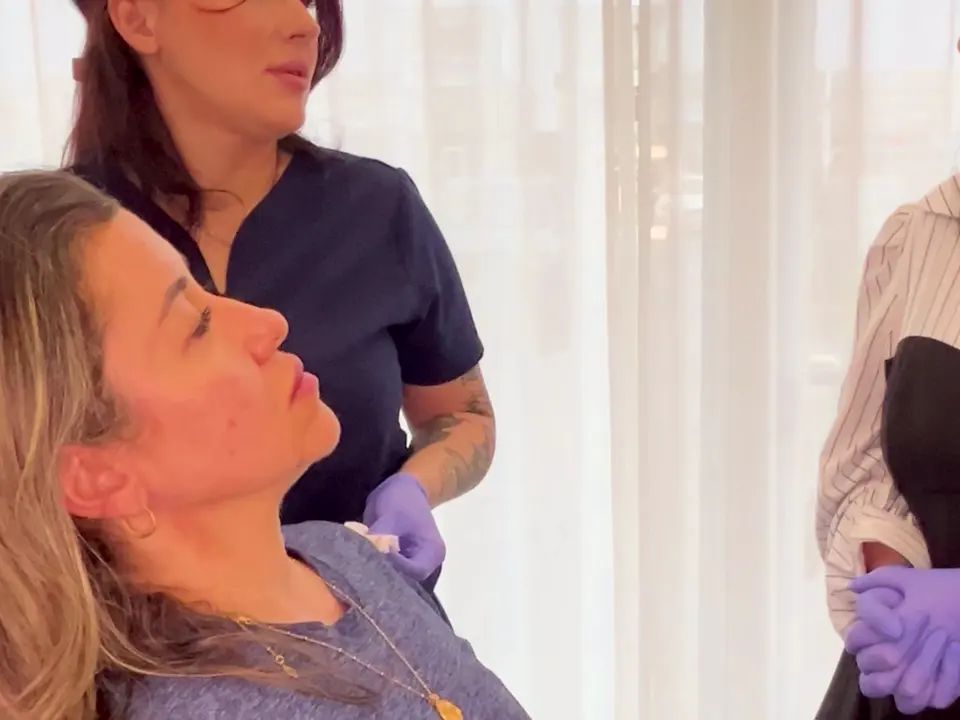 Step 1AssessAn NP or physician assesses every live model first.
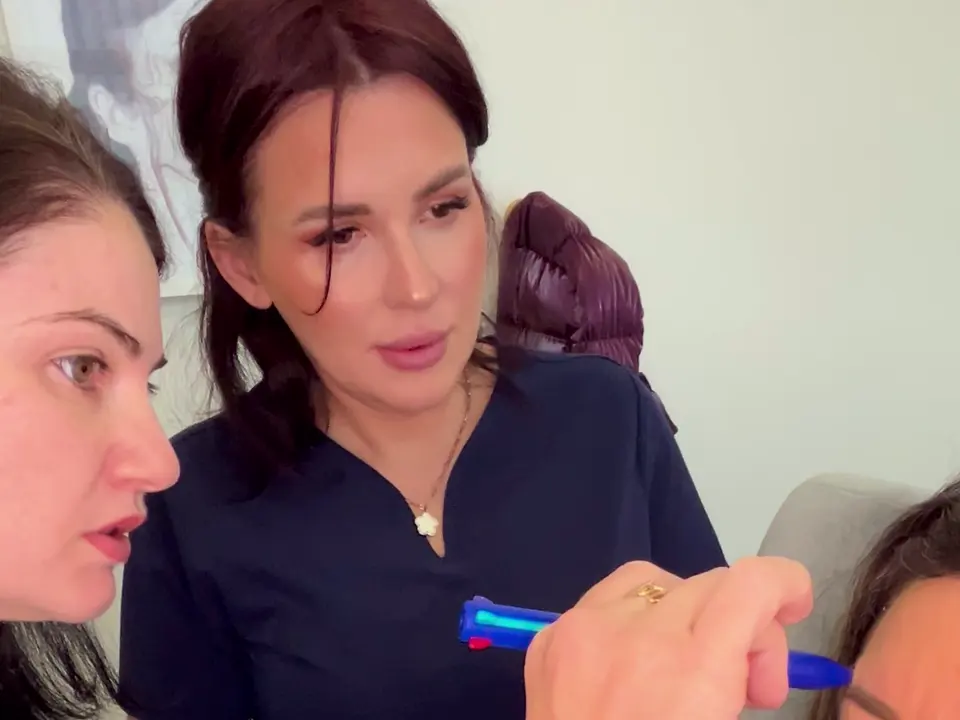 Step 2MapYou mark landmarks and vessels. Your trainer checks it.
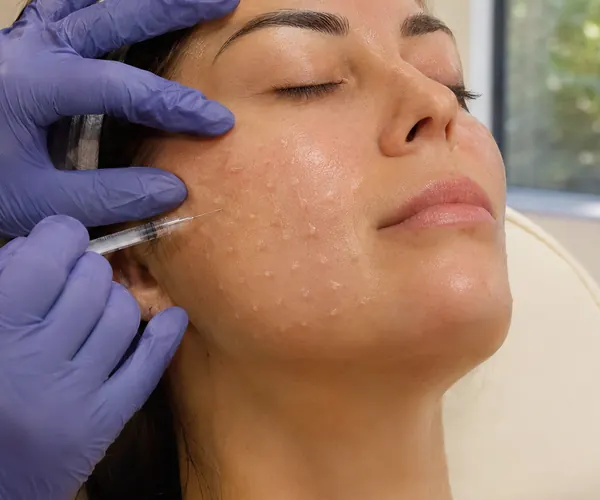
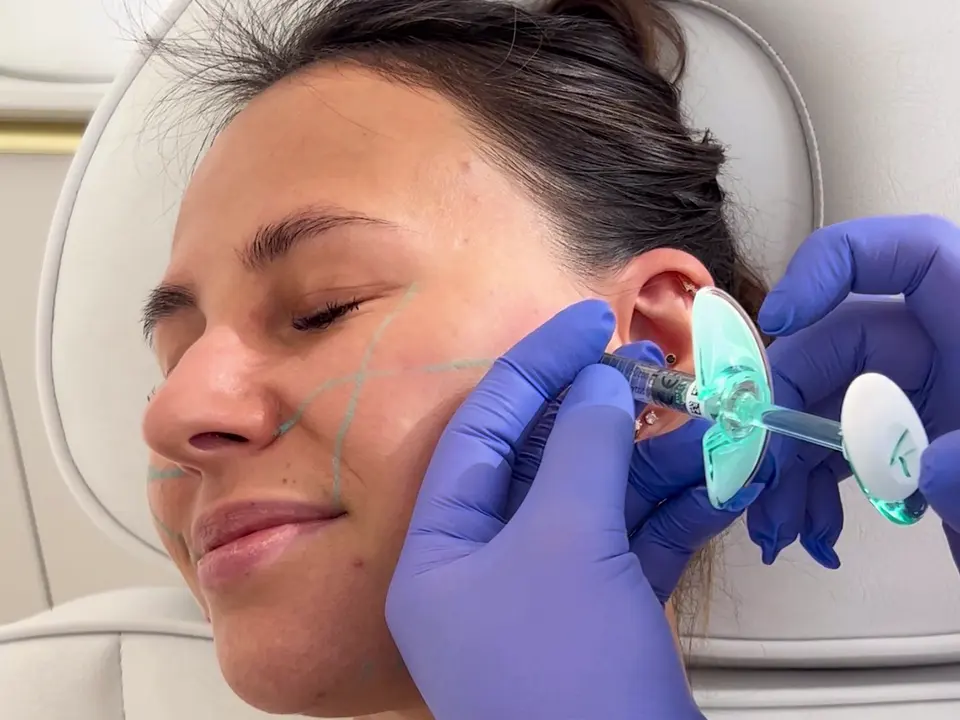 Step 3TreatYou inject under supervision, 3 students at most.
Dates
- DatesAsk admissions.All dates
Admissions gives the next date for this course.
Questions first? Read the course FAQ or see admissions.
Before you book
Who it's for, what you leave with, and what nurses ask.
Who can take it
RNs, RPNs, NPs and physicians who have finished a beginner filler course. RNs and RPNs practise with an order from an NP or physician, and from 1 March 2027 it must be a client-specific order (what changes in March). New to filler? Start with Dermal fillers or Foundations. Naturopathic doctors: this course isn't open to NDs. Check your licence on the Can I train? list.
What you leave with
A certificate of completion. It records the course you took and the training you finished. Permission to inject comes from your licence and, for RNs and RPNs, an order from an NP or physician.
What do I need before the advanced filler course?
A beginner filler course, here or elsewhere, covering the cheeks, chin and lips. If you trained elsewhere, tell admissions what you covered.
Do you teach cannula technique?
Yes. It's the first module: entry points, layers, and when a cannula fits better than a needle, practised on live models under supervision.
How small are the groups?
Very small: 3 students at most per class. Your trainer checks your map, and every model is assessed by an NP or physician, before you treat.
Are biostimulators part of this course?
No. They have a course of their own: Biostimulators.
Can RPNs take the advanced filler course?
Yes, once they've finished a beginner filler course. To practise, you work on an order from an NP or physician, and from 1 March 2027 that order is client-specific.
Get the one-page order check: what a client-specific order should contain, and the questions to ask before every injection.
Your checklist is ready.
Download it, print it, and keep it by the chair.
Next on the map
Learn in a small group. Practice with guidance. Grow with ongoing support.