
Injector complications course for nurses in Ontario
An injector complications course in Ontario for RNs, RPNs, NPs and physicians who inject, or are about to. One day in clinic on what to do when a treatment goes wrong, and the same red lines are taught inside every course on the map.
 !Red lines
- In clinicTheory, then supervised hands-on
- 3 students maxVery small groups
- Theory firstThen supervised hands-on
- DatesAsk admissions. All dates
- PriceAdmissions gives the price
One mark. Five modules.
The red lines run under every other mark on the map. You learn them in class first, then practise each step in clinic until the order is automatic.
- !Red lines Recognizing vascular compromise early What the skin tells you in the first seconds and minutes: colour change, pain out of proportion, a pattern spreading from the point you treated. You learn to look for it during the treatment, not only after. Respect: The vessels you drew. The red lines on your map are where you look first when something changes.
- !Red lines The emergency kit in the room What the kit holds, where it sits, how you check it before the first client, and who in the room knows how to use it. The kit is in the room before the needle is, every time. Respect: The check. A kit nobody checked this morning is not a kit.
- !Red lines The first minutes, in order Stop. Assess. Call for help and tell the authorizing NP or physician. Follow the protocol for the product and the complication, step by step, and keep the client with you. You practise the sequence aloud until you don't have to think about it. Respect: The order of steps. Under pressure, the sequence is what you fall back on.
- !Red lines Escalation When a complication is beyond the room: the signs that mean emergency services now, what you tell them, and what goes with the client. Changes in vision after a face treatment are always an emergency. Respect: The line between managing and escalating. You learn where it is before you need it.
- !Red lines Charting and follow-up Writing down what happened, when, what you did and who you told, against the order. Then the follow-up plan, and who calls the client next. Respect: The record. If it isn't charted, the next clinician can't help.
Your clinic days
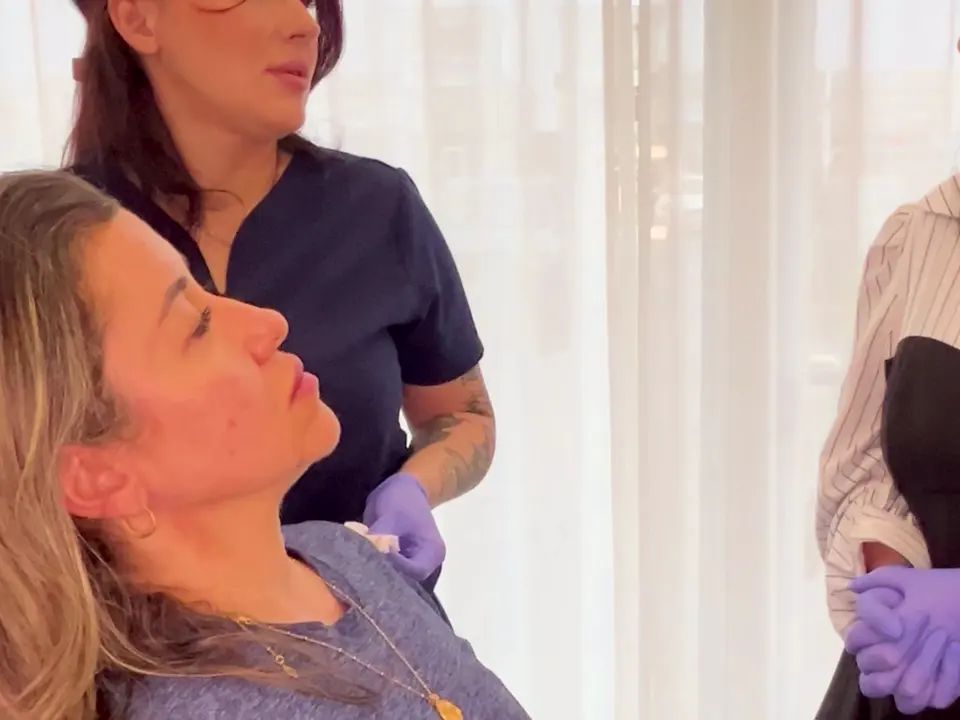 Step 1AssessAn NP or physician assesses every live model first.
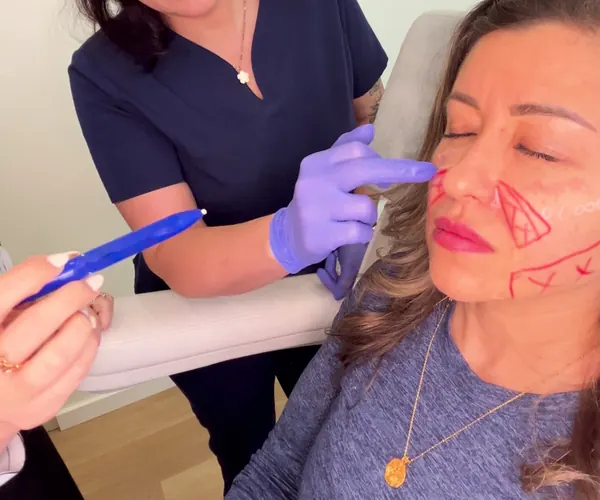
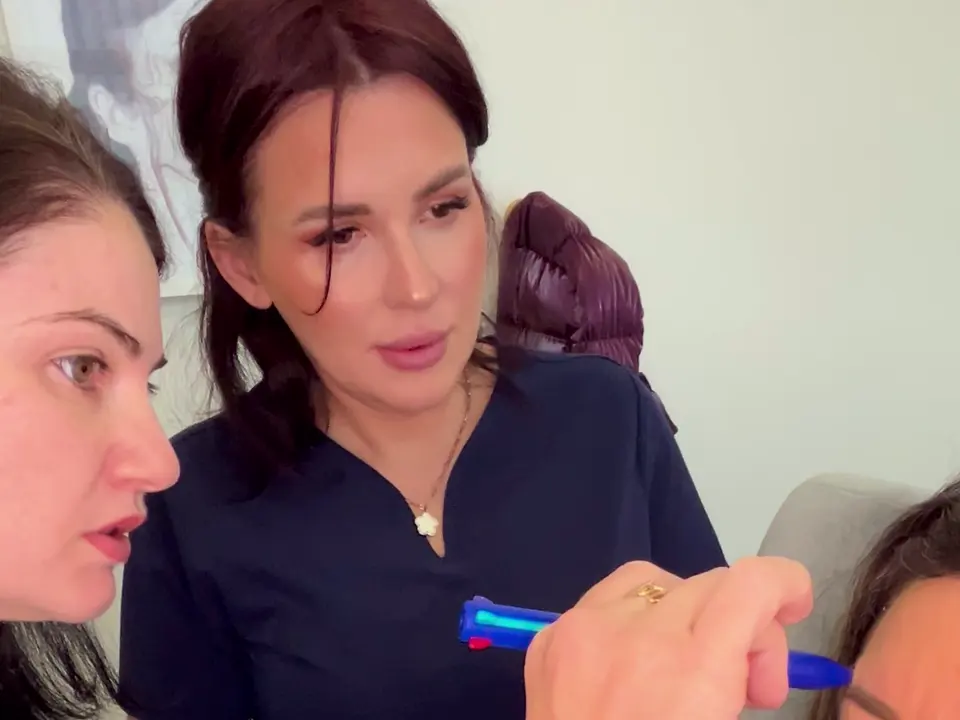 Step 2MapYou mark landmarks and vessels. Your trainer checks it.
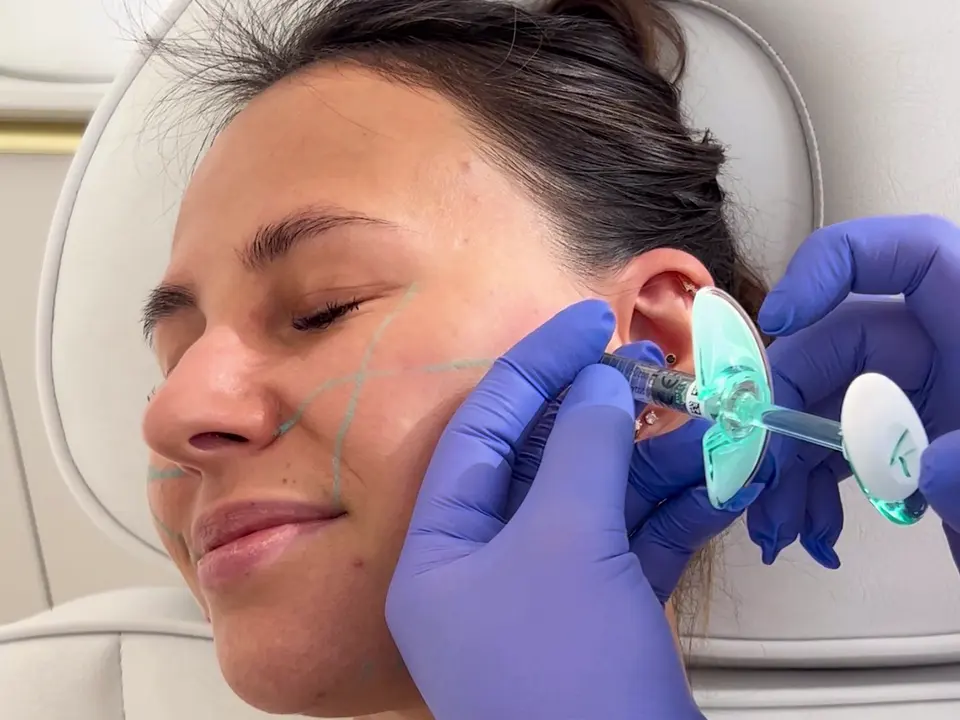 Step 3TreatYou inject under supervision, 3 students at most.
Dates
- DatesAsk admissions.All dates
Admissions gives the next date for this course. After this: Dates
Questions first? Read the course FAQ or see admissions.
Before you book
Who it's for, what you leave with, and what nurses ask.
Who can take it
RNs, RPNs, NPs and physicians who inject or are training to. It's also taught inside every course on the map, so you can take it as its own day or as a refresher. To practise, RNs and RPNs need an order from an NP or physician (what changes on 1 March 2027). Dentists: talk to us first. Check your licence on the Can I train? list.
What you leave with
A certificate of completion. It records the course you took and the training you finished. Permission to inject comes from your licence and, for RNs and RPNs, an order from an NP or physician.
Is complications training already part of the other courses?
Yes. Every course on the map teaches its own red lines before your first model. This day goes further, with the full sequence practised until it's automatic.
Who should take the complications day on its own?
Anyone who injects or is about to. It suits nurses who trained somewhere else and want to practise the first minutes again, and anyone who wants a refresher.
Does this course teach drug doses for emergencies?
No set doses are taught as a recipe. You learn the protocol in order, and the products and amounts follow the authorizing NP or physician's orders and your clinic's emergency policy.
What does CNO expect a nurse to know about complications?
CNO's Aesthetic Services guideline lists adverse reactions and managing outcomes in the theory a nurse should have, and expects clinics to have emergency policies in place.
Does the certificate cover me if something goes wrong?
No. It's a certificate of completion and records your training. Your authority, your order and your clinic's policies are what you work under.
Get the one-page order check: what a client-specific order should contain, and the questions to ask before every injection.
Your checklist is ready.
Download it, print it, and keep it by the chair.
Next on the map
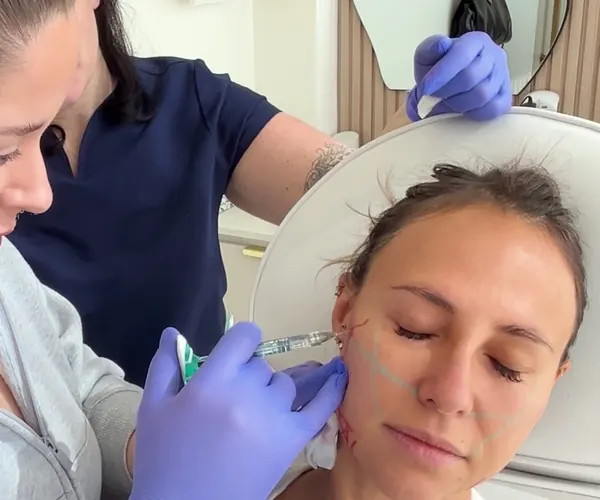

Learn in a small group. Practice with guidance. Grow with ongoing support.