
1 March 2027: what changes for Ontario nurse injectors
From 1 March 2027, Ontario RNs and RPNs who provide aesthetic treatments involving prescription drugs or controlled acts must work on client-specific orders, not medical directives. An NP or physician first assesses the client, in person or virtually, and sets a plan of care. Then they write the order for that one client.
Five steps, every model
The 2027 workflow, on every clinic day.
-
 Step 1AssessAn NP or physician assesses each model first, in person or virtually.
- Step 2OrderThey set the plan of care and write an order for that one client. No order, no treatment.
-
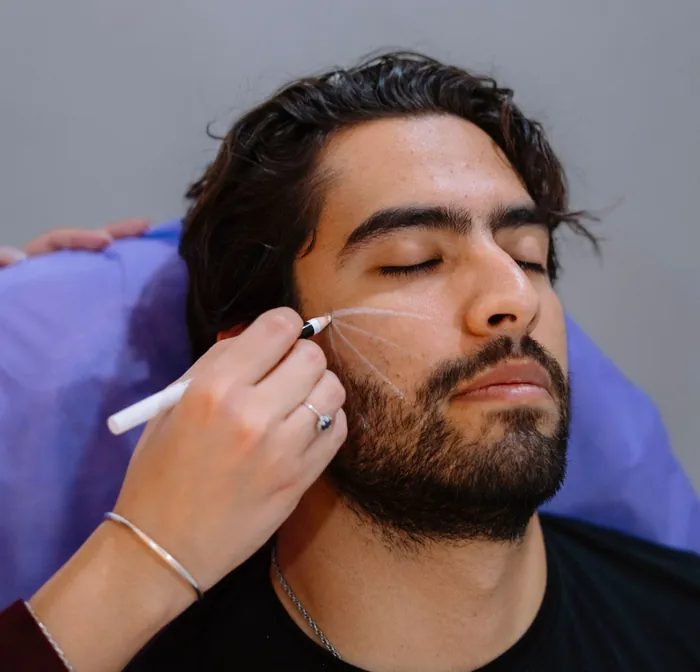 Step 3MapYou mark the landmarks and the vessels in white pencil. Your trainer checks your map before anything else happens.
-
 Step 4TreatYou inject under supervision, in a class of 3 students at most.
- Step 5ChartYou chart against the order: product and lot recorded, follow-up booked. The same paperwork you'll use after March.
What changes
A directive
A written order for an activity that can be carried out for many clients when set conditions are met. The provider who writes it must have the authority to order it, and they keep ultimate responsibility.
A client-specific order
Three requirements, effective 1 March 2027, for nurses providing aesthetic services:
- Use client-specific orders, rather than directives, for treatments involving prescription drugs or controlled acts.
- The authorized provider completes an initial client assessment, in person or virtually, and sets a plan of care before issuing the order.
- When delegating to someone without authority, the nurse stays onsite for the whole procedure.
In plain terms: the standing instruction that covered "any client who meets these conditions" no longer covers aesthetic treatments involving prescription drugs or controlled acts. Each client needs their own assessment, their own plan of care and their own order.
Source: College of Nurses of Ontario, announced 14 October 2026, effective 1 March 2027; Aesthetic Services practice guideline (June 2026). All sources
"Is my directive still good?"
On 14 October 2026 the College of Nurses of Ontario (CNO) announced new requirements for nurses providing aesthetic services. They take effect on 1 March 2027. If you inject today under a medical directive, this is the change that matters to you. Below is what the three ways of getting authority mean, what CNO announced, what doesn't change, and the questions worth taking to your medical director this month.
This page explains the rules as CNO has published them. It isn't legal advice. Your NP or physician, your employer and CNO's own documents have the final word.
"Order, directive, delegation: aren't they the same thing?"
No. They are three different ways an authorized provider lets someone else act, and nurse injectors tend to use the words loosely.
Direct order
It is client-specific. It can be written or verbal, and it covers a specific activity at a specific time for one client.
Directive (often called a medical directive)
A written order for an activity that can be carried out for many clients when set conditions are met. The provider who writes it must have the authority to order it, and they keep ultimate responsibility.
Delegation
A professional who has the authority and competence for a controlled act temporarily transfers the authority to perform it for an individual client. The delegator keeps the responsibility. Nurses can't pass on a controlled act that was delegated to them.
"Why does a nurse need any of these?"
Injecting a neuromodulator or a dermal filler involves two controlled acts: administering a substance by injection, and performing a procedure below the dermis. CNO says so plainly in its *Aesthetic Services* practice guideline. RNs and RPNs may perform them only with an authorizing mechanism from an authorized provider, such as an NP or physician, based on an assessment of the client.
"Is this the last change?"
CNO's guideline says it is reviewing how directives and delegation are used in aesthetic practice, and that nurses must follow changes when they take effect. So check CNO's site before 1 March 2027, and again after. We'll update this block when anything moves.
"What stays the same?"
More than you'd think.
- RNs and RPNs still need an order from an NP or physician. That was true before the announcement and it stays true after it.
- NPs and physicians still inject on their own authority, and NPs can still write orders for the nurses they work with.
- Your employer's policies still need to cover emergencies, prescriber availability, and Health Canada approved products only.
- CNO still doesn't approve or endorse any training program. It describes good training as theory, supervised practice and evaluation.
- A certificate of completion still gives no one the right to inject. Authority comes from your licence and, for RNs and RPNs, an order.
"I'm an RN or RPN. What do I do now?"
Find out which mechanism you work under today. Ask to see it. If it's a directive, expect it to stop covering your aesthetic treatments involving prescription drugs or controlled acts on 1 March 2027.
Then look at your booking flow. Every new client will need an assessment by the NP or physician, in person or virtually, before you treat. That takes time in the calendar. Plan it now rather than in late February.
Last, look at your charting. When each treatment rests on one order for one client, your chart should show that order, the plan of care, what you did and the follow-up. If your notes don't line up with the order, fix the template before March.
The order check, on one printable page.
What a client-specific order should contain, and the questions to ask before every injection, in the order you work. For Ontario RNs, RPNs and NPs getting ready for 1 March 2027.
Your checklist is ready.
Download it, print it, and keep it by the chair.
"What should I ask my medical director?"
Nurses search for a "medical director for nurse injector" when they mean the NP or physician who authorizes their work. Whoever that is for you, these are questions, not legal advice. Take them to the meeting and write the answers down.
- How will you assess each new client from 1 March 2027: in person, virtually, or both?
- Where is the plan of care kept, and who updates it?
- What will each order say, and how will it reach me before I treat?
- What happens when a client's plan changes, or they want a new area?
- When are you onsite, and how do I reach you during a treatment?
- Who manages a complication, and what does our emergency policy say?
- Which products are covered, and are they all Health Canada approved?
- How will you check my training before I start?
If an answer is "we'll sort it out later", that's your answer too. Ask CNO's practice support if you're unsure what applies to you.
"Does The Aesthetic Method train this way?"
Yes. Every live model on our table goes through the same five steps, so you learn the 2027 workflow before you need it.
Draw it. Check it. Then treat.
The workflow runs through every course on the map. Start with Foundations if you're new, or go straight to Neuromodulators or Dermal fillers. The red lines, what you do in the first minutes of a vascular problem, have a day of their own. Not sure your licence fits? See the Can I train? list. Dates are on the dates page.
The order check, on one printable page.
What a client-specific order should contain, and the questions to ask before every injection, in the order you work. For Ontario RNs, RPNs and NPs getting ready for 1 March 2027.
Your checklist is ready.
Download it, print it, and keep it by the chair.
Questions
Can I still use my medical directive after 1 March 2027?
Not for aesthetic treatments involving prescription drugs or controlled acts. CNO announced on 14 October 2026 that nurses must use client-specific orders for these from 1 March 2027. Check with your NP or physician what replaces your directive.
Does the NP or physician have to see the client in person?
No, the initial assessment can be in person or virtual. CNO's announcement says the authorized provider completes it and sets a plan of care before issuing the order.
Can an RN or RPN inject without an order in 2027?
No. RNs and RPNs inject only with an order from an NP or physician, and from 1 March 2027 that order is client-specific for aesthetic treatments. NPs and physicians inject on their own authority.
Does a training certificate count as authority?
No. A certificate of completion records the training you finished. Permission to inject comes from your licence and, for RNs and RPNs, an order from an NP or physician.
Is your course approved by CNO?
No course is. CNO doesn't approve or endorse training programs. It describes good training as theory, supervised practice and evaluation, and that's how ours is built.
Sources
- College of Nurses of Ontario, release: CNO strengthens client safety with new requirements for nurses providing aesthetic services (14 October 2026), via Newswire
- College of Nurses of Ontario, *Aesthetic Services* practice guideline (June 2026)
- College of Nurses of Ontario, *Scope of Practice* practice standard
- College of Nurses of Ontario, New guideline for nurses supports safe aesthetic services for Ontarians (3 July 2026)
- College of Physicians and Surgeons of Ontario, *Delegation of Controlled Acts* policy
- CPSO Dialogue, Expectations of Physician Medical Directors in Cosmetic Clinics (June 2026)
Learn in a small group. Practice with guidance. Grow with ongoing support.