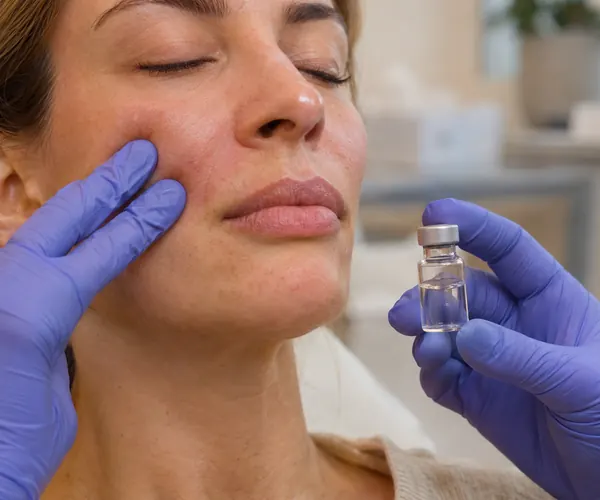
Hyaluronidase is the enzyme that breaks down hyaluronic acid. Because most dermal fillers are made of hyaluronic acid, it is the product a clinic reaches for when filler has to come out, fast or slowly: in a complication, or when filler sits where it shouldn't.
If you inject filler, or are training to, it belongs in your emergency kit before your first client. This post explains what it is, why it matters, who orders it in Ontario, and what good storage and charting look like at a high level. It doesn't give doses or protocols. Those come from your prescriber's order and your clinic's protocol, every time.
What is hyaluronidase?
Hyaluronic acid is a sugar molecule your body already makes. It holds water in the skin and the tissues around it. Hyaluronic acid fillers use a stabilized form of it, built to stay in place for months.
Hyaluronidase is an enzyme that breaks those molecules apart. Given by injection where the filler sits, it lets the body clear filler that would otherwise stay.
Two things follow from that, and both matter in practice:
- It only works on hyaluronic acid. Fillers made of other materials, such as the biostimulators, don't respond to it. Your chart should always show exactly what product went in, so the next person knows whether hyaluronidase is an option.
- It isn't selective. It acts on hyaluronic acid generally, not only on the filler. That's one reason it is used on an order, for a reason, and not casually.
Why does it belong in the emergency kit?
Most filler treatments go exactly as planned. The rare ones that don't are why the kit exists.
The most serious filler complication is vascular compromise: filler inside or pressing on a vessel, cutting off blood supply to the tissue it feeds. Recognized early, it can be acted on. Recognized late, the damage can be lasting. Changes in vision after a face treatment are always an emergency.
When the filler is hyaluronic acid, hyaluronidase matters because it can break down the filler causing the problem. Your prescriber's order and your clinic's protocol say when and how it is used. That only helps if it is in the room, in date, and someone in the room knows how to use it on an order. Fetching it from another site, or finding it expired, costs the minutes that matter.
That's why our rule in clinic is simple: the kit is in the room before the needle is, every time. A kit nobody checked this morning is not a kit.
Less urgent uses exist too. Filler can sit in the wrong plane, form a lump, or simply be more than the client wants. Those are calmer conversations, but the same principle holds: hyaluronidase is used on an order, after an assessment, with consent.
Who orders hyaluronidase in Ontario?
Hyaluronidase is given by injection. Administering a substance by injection is a controlled act. CNO's Aesthetic Services practice guideline is clear that RNs and RPNs may perform controlled acts only with an authorizing mechanism from an authorized provider, such as an NP or physician, based on an assessment of the client.
So a nurse injector doesn't decide alone to give hyaluronidase. An NP or physician does, and the order sets out what is given and how.
From 1 March 2027, CNO requires nurses providing aesthetic treatments involving prescription drugs or controlled acts to work on client-specific orders, after the authorized provider has assessed the client and set a plan of care. In an emergency that raises a practical question every clinic should answer in advance, in writing: how does the order for hyaluronidase reach the nurse in the first minutes? Ask your NP or physician:
- What does our emergency policy say about filler complications?
- When are you onsite, and how do I reach you during a treatment?
- Who manages a complication, and when do we call emergency services?
- What is in our emergency kit, and who checks it?
CNO's guideline expects employers to have policies for emergencies and prescriber availability. If your clinic's answer is "we'll figure it out if it happens", fix that before your next filler client.
Storage and charting, at a high level
You don't need a protocol from a blog post, and you shouldn't take one. What you do need is the habit.
Storage. Store hyaluronidase the way its product information and your clinic's protocol say. Know where it is, check the expiry date as part of the morning kit check, and replace it before it runs out, not after. The products your clinic stocks should be Health Canada authorized; you can look any product up in Health Canada's Drug Product Database.
Charting. When hyaluronidase is used, the chart should tell the full story to anyone who reads it later:
- the order, and who gave it;
- what the problem was and when you noticed it;
- the product and lot, and the time it was given;
- what you saw afterwards, and what follow-up was booked;
- for the original treatment, exactly which filler went in.
Good charting protects the client, protects you and helps whoever treats this client next.
Before your first filler client: five questions
Take these to the clinic before you inject filler there. They take five minutes to ask, and the answers tell you whether the room is ready.
- Is hyaluronidase in the room? Not in the building, not at another site. In the room where you treat.
- Who checked it today? Ask to see the kit check, and the expiry date.
- How do I get the order in the first minutes? Know exactly who you call, and how they reach you.
- What do we do while we wait? Your clinic's protocol should set out the first steps, in order.
- When do we call emergency services? Know the signs that mean calling now, and what goes with the client.
If any answer is unclear, settle it before the first client, not during a complication.
Why complications training matters
Knowing hyaluronidase exists is not the same as being ready to act. Readiness is recognizing the early signs, knowing what's in the kit, and doing the first steps in order while someone calls the prescriber.
CNO's guideline lists adverse reactions and managing outcomes in the theory a nurse should have. That's the knowledge. The skill comes from practising the first minutes before you need them.
At The Aesthetic Method, complications are taught inside every filler course, so you meet the red lines before you meet your first client. They also have a day of their own: one day in clinic on recognizing vascular compromise early, the emergency kit in the room, and the first minutes, in order. Take it as its own day or as a refresher.
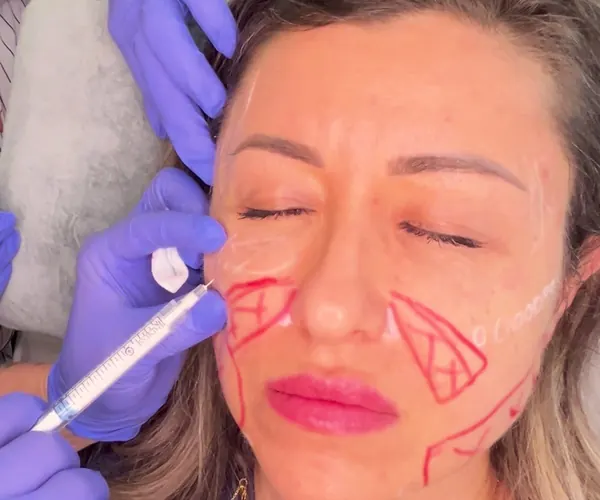
If you're starting out, our Dermal fillers course teaches cheeks, lips, chin and jawline, and the vessels under them, mapped in white pencil before you inject live models in a class of 3 at most. Tell us your licence and we'll tell you where to start.
Questions nurses ask
What is hyaluronidase used for in aesthetics?
It is an enzyme that breaks down hyaluronic acid, so it can dissolve hyaluronic acid filler. Clinics keep it for filler complications, including vascular compromise, and for filler that needs to come out.
Can a nurse give hyaluronidase without an order in Ontario?
No. It is given by injection, a controlled act, so RNs and RPNs give it only with an order from an NP or physician. Follow that order and your clinic's protocol.
Does hyaluronidase dissolve every kind of filler?
No. It works on hyaluronic acid. Fillers made of other materials don't respond to it, which is one reason to know exactly what product went in.
Where can I learn to manage filler complications?
Our Complications course is one day in clinic on vascular compromise, the emergency kit and the first minutes, in order. It's also taught inside every filler course.
Sources
- College of Nurses of Ontario, Aesthetic Services practice guideline: https://cno.org/Assets/CNO/Documents/Standard-and-Learning/Practice-Standards/practice-guideline-aesthetic-services-en.pdf
- College of Nurses of Ontario, CNO strengthens client safety with new requirements for nurses providing aesthetic services (14 October 2026), via Newswire: https://www.newswire.ca/news-releases/cno-strengthens-client-safety-with-new-requirements-for-nurses-providing-aesthetic-services-893472595.html
- Health Canada, Drug Product Database: https://www.canada.ca/en/health-canada/services/drugs-health-products/drug-products/drug-product-database.html