A Botox certificate in Ontario is a certificate of completion. It records the course you took and the training you finished. It is not a licence, it doesn't let you inject on its own, and no course in Ontario is approved by the College of Nurses of Ontario, because CNO doesn't approve or endorse training programs.
That doesn't make the certificate worthless. It's the record an employer or a medical director looks at when they decide whether to work with you. So the useful question isn't "is this certification official?" It's "what does this certificate actually prove I can do?" This post explains what a certificate is and isn't, what a good course puts behind it, and what you still need after the course.
What is a Botox certificate?
When people search for "Botox certification", they usually mean one of three different things:
- A certificate of completion. A course gives it when you finish. It records what you trained in. This is what every legitimate course in Ontario gives.
- A licence. Your licence comes from your regulator: CNO for RNs, RPNs and NPs, CPSO for physicians. No course can give you one.
- Authority to inject. For RNs and RPNs, that comes from an order from an NP or physician. A certificate is not an order.
At The Aesthetic Method you leave with a certificate of completion. It records the course you took and the training you finished. We don't claim any accreditation or CE credits.
What a certificate isn't
Be careful with any course that suggests otherwise. A certificate:
- isn't CNO approval. CNO doesn't approve or endorse training programs, so "CNO approved Botox course" describes something that doesn't exist.
- isn't a licence to inject. Permission to inject comes from your licence and, for RNs and RPNs, an order from an NP or physician.
- isn't proof of competence on its own. It shows you finished training. You remain responsible for being competent in what you do, and for staying within your scope.
None of that is a reason to skip training. It's a reason to choose training that gives the certificate real weight.
Certificate, licence, order: who checks what?
It helps to see the three pieces from the side of the people who will look at them.
A clinic hiring you checks your licence first. Anyone can look up a nurse on CNO's public register, and a careful employer will. Then they look at your training record: which course, which areas, whether you injected live models, and who supervised you. That's where the certificate does its work.
The NP or physician who writes your orders is taking responsibility for the treatments they order. Before they order for you, they want to know you can do what the order says. Your certificate of completion, and the record of what you trained in, is what you show them. A record that says "theory, supervised practice on live models, evaluation" answers their question. One that says "attended a one day workshop" raises it.
Your insurer wants to know what you do and what you trained in. Have your certificate ready when you ask.
So a certificate is a record you show to people who decide. Make sure it records something worth showing.
What should the certificate say?
Ask a school to show you a sample before you book. A useful certificate of completion names:
- you, and the course you took;
- the dates you trained;
- the areas you trained in;
- that the training included supervised injecting on live models.
It should not say you are "certified to inject", "licensed" or "CNO approved". If a sample says any of those things, ask why.
What should a good course put behind the certificate?
CNO's Aesthetic Services practice guideline doesn't approve courses, but it does describe good training. It has three parts:
- Theory. What you need to know before you touch a client. CNO's list includes adverse reactions and managing outcomes.
- Supervised practice. Treating real clients while someone competent watches and corrects.
- Evaluation. Someone checking that you can actually do it.
A certificate backed by all three tells an employer something real. A certificate from a day of slides and practice pads tells them much less.
Here's how that looks in our Botox training:
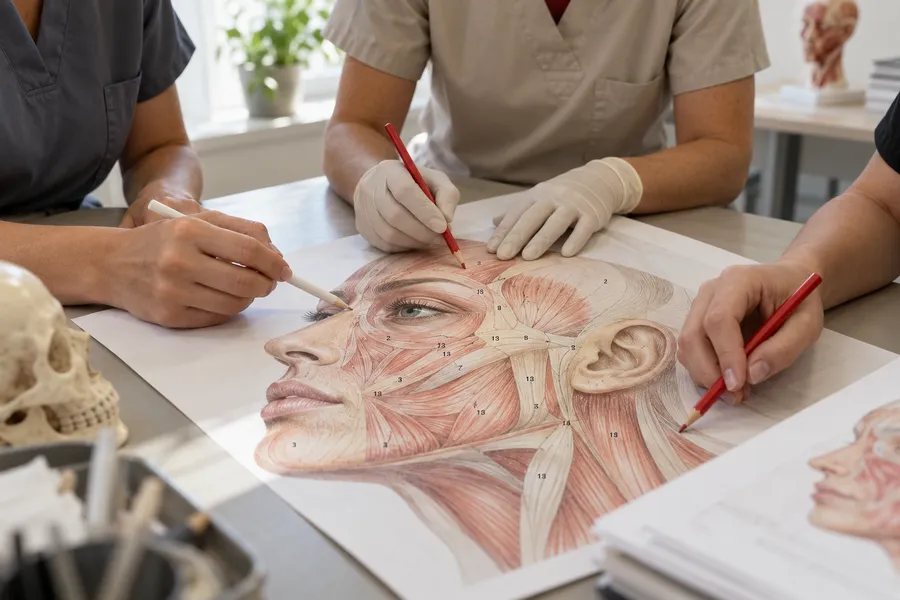
- Theory first. Facial anatomy, assessment, consent, charting against the order, and the red lines.
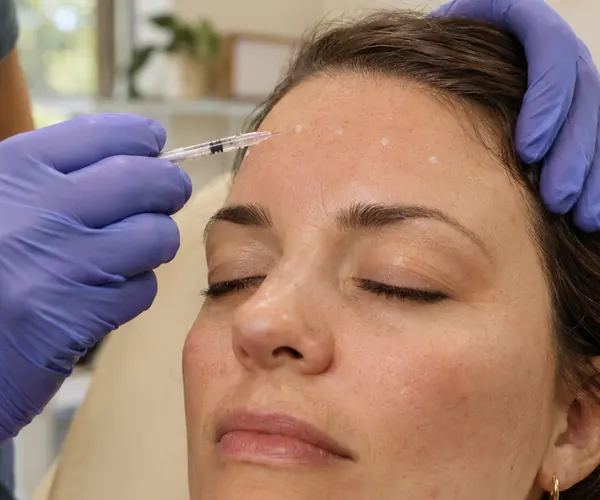
- Live models. Every model is assessed by an NP or physician and treated on an order for that one client.
- Supervision. A class of 3 students at most, so your trainer watches every injection.
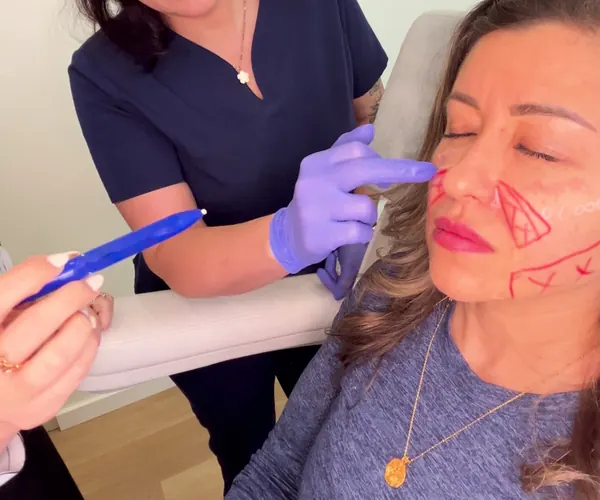
- Mapping. You mark the landmarks in white pencil, and your trainer checks your map before you inject.
- Support after. 12 months of support once the course ends.
Foundational Botox is 2 days, $2,999 + HST, on the upper face. Foundational Botox & Dermal Filler is 4 days over two weekends, $4,999 + HST, across the whole face.
What do you still need after the course?
The certificate is the start. Before you treat your first client on your own, you need three more things.
An authorizing provider. RNs and RPNs inject only on an order from an NP or physician. From 1 March 2027, for aesthetic treatments involving prescription drugs or controlled acts, CNO requires client-specific orders: the NP or physician assesses each client, in person or virtually, sets a plan of care, then writes the order. Before you join a clinic, ask who that provider is and how the orders will work. We cover the change in 1 March 2027: what changes for Ontario nurse injectors.
Insurance. Ask your professional liability insurer, before you start, whether your policy covers aesthetic injections. Ask your employer what it requires too. Get the answer in writing.
A clinic set up for safety. CNO's guideline expects employers to have policies for emergencies, prescriber availability, and Health Canada approved products only. Ask to see them. An emergency kit should be in the room, checked, before the first client.
Then keep building. Most injectors add filler, then advanced areas, as their confidence grows. A good course tells you honestly what you're ready for next.
Questions to ask before you pay for any Botox course
- What exactly will my certificate say?
- Will I inject live models, and how many?
- How many students are in the class?
- Who evaluates me, and what do they check?
- Is the March 2027 order model taught?
- Are complications covered?
- What support is there after the course?
- What is the full price, with HST?
If a school can't answer these plainly, that tells you something. If you want a longer list, read how to choose a nurse injector course in Ontario. For the short answers, see our FAQ.
Tell us your licence and we'll tell you which course to start with, and the next date for it.
Questions nurses ask
Does a Botox certificate let me inject in Ontario?
No. A certificate of completion records the training you finished. Permission to inject comes from your licence and, for RNs and RPNs, an order from an NP or physician.
Is there a CNO approved Botox certification?
No. The College of Nurses of Ontario doesn't approve or endorse training programs. It describes good training as theory, supervised practice and evaluation.
Is your course accredited, or does it give CE credits?
We don't claim any accreditation or CE credits. You get a certificate of completion and a record of what you trained in, which you can show an employer or the NP or physician who writes your orders.
Do I need my own insurance after the course?
Ask your professional liability insurer whether your policy covers aesthetic injections before you start treating clients. Your employer may have its own requirements too.
How long is the Botox course?
Foundational Botox is 2 days, $2,999 + HST. Foundational Botox & Dermal Filler is 4 days over two weekends, $4,999 + HST.
Sources
- College of Nurses of Ontario, Aesthetic Services practice guideline: https://cno.org/Assets/CNO/Documents/Standard-and-Learning/Practice-Standards/practice-guideline-aesthetic-services-en.pdf
- College of Nurses of Ontario, New guideline for nurses supports safe aesthetic services for Ontarians (3 July 2026): https://www.cno.org/news/new-guideline-for-nurses-supports-safe-aesthetic-services-for-ontarians
- College of Nurses of Ontario, CNO strengthens client safety with new requirements for nurses providing aesthetic services (14 October 2026), via Newswire: https://www.newswire.ca/news-releases/cno-strengthens-client-safety-with-new-requirements-for-nurses-providing-aesthetic-services-893472595.html